
Austria’s high-tech network
for electronic and software based systems
SILICON ALPS

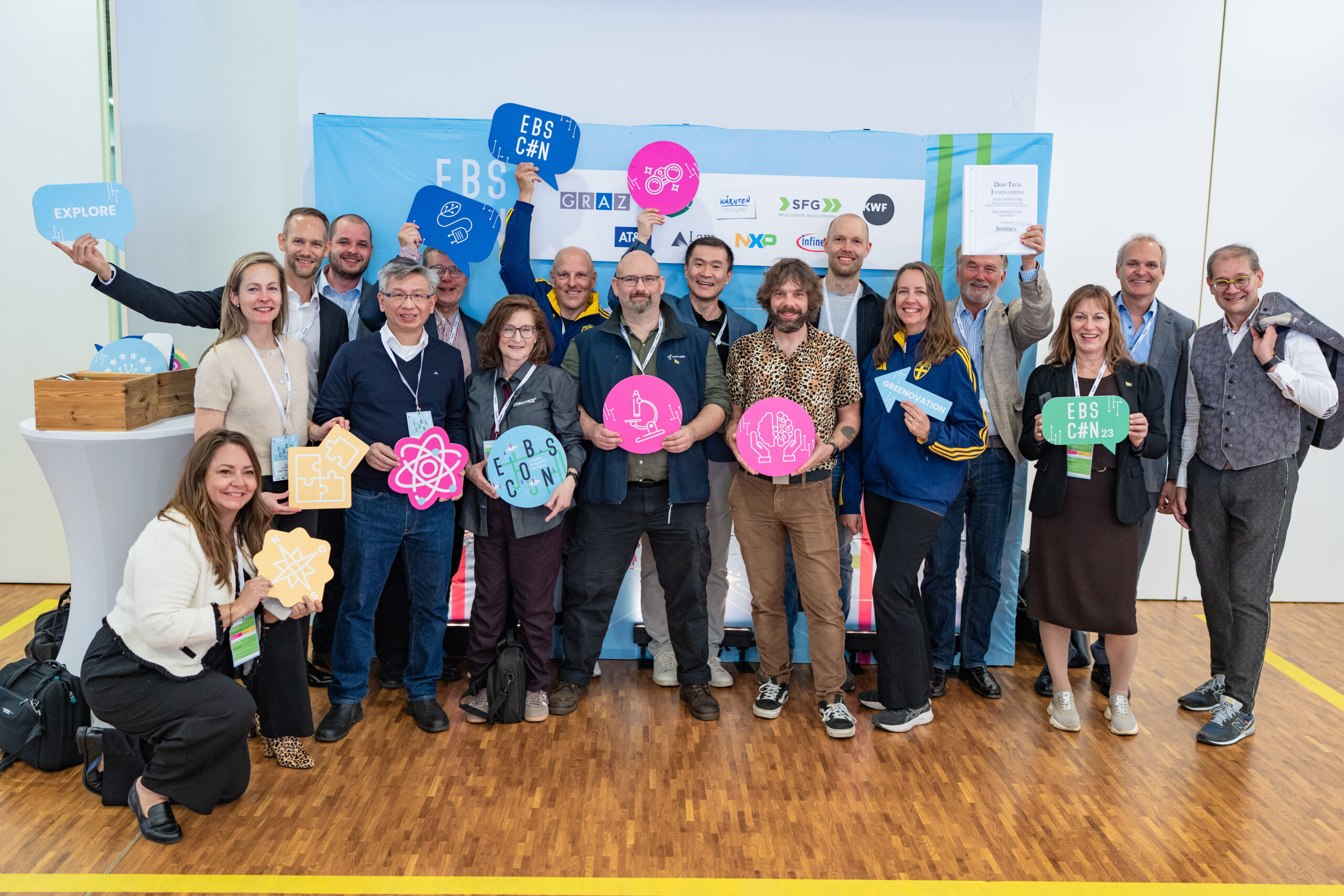
Graz/Villach, 9 October 2026. Europe is at a turning point when it comes to semiconductors, AI and strategic technologies. EBSCON, the leading trade fair for the European semiconductor and electronics industry, held in Graz on 7 October 2026, was therefore themed ‘Crossroads – Europe at a Turning Point’. The central question – how quickly, and through what measures, Europe, as the global market leader in chip technologies, can translate technological expertise into tangible industrial strength and value creation – ran through all the keynote speeches, panel discussions and debates. EBSCON 2026, which took place for the second time as part of EBSCON WEEK, brought together various levels: European strategy, regional location policy, innovation, start-ups and industrial implementation.
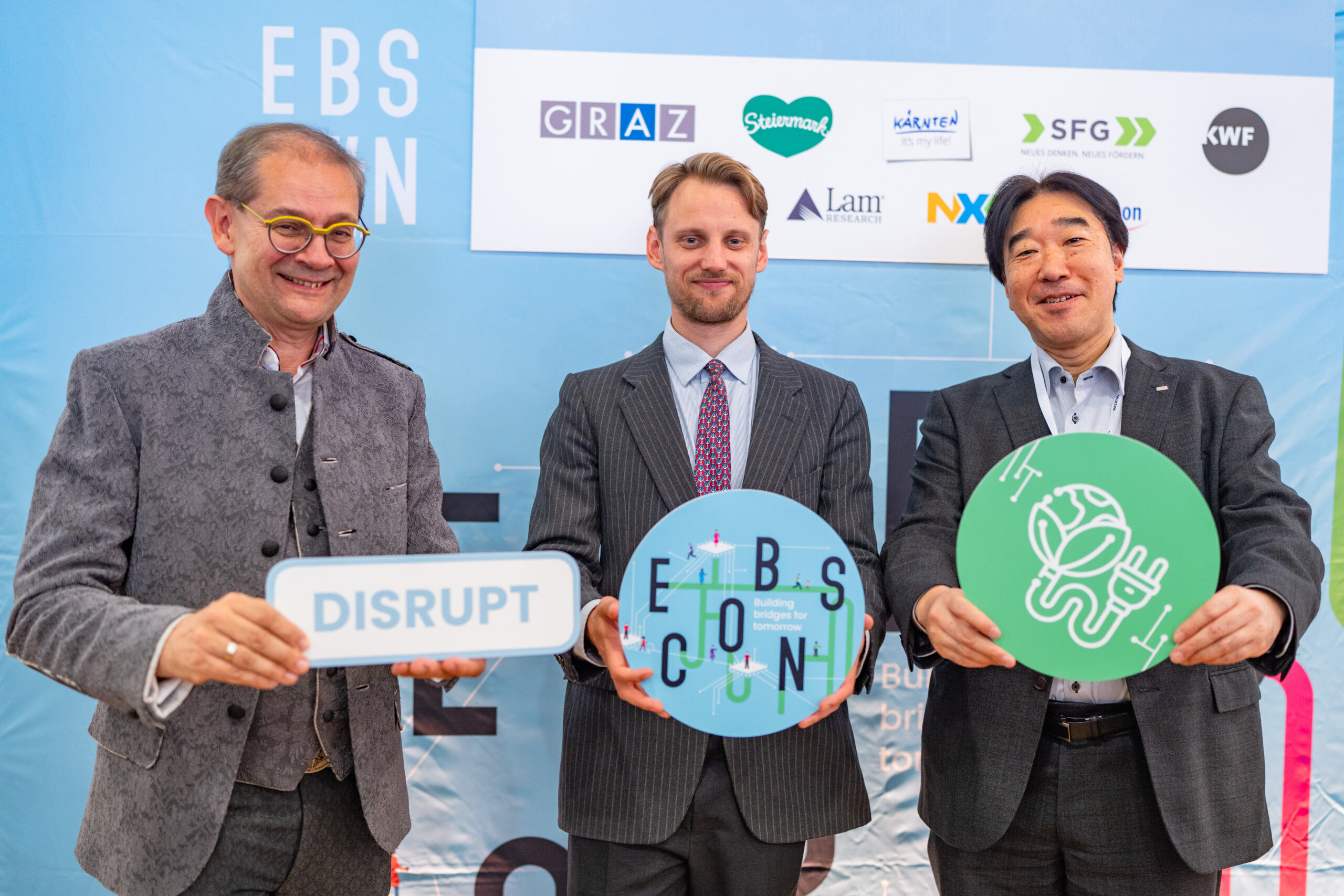
Robert Gfrerer, Jonas Jütting and Hideki Chou at EBSCON 2026
Further print-quality photos from EBSCON 2026 (reproduction with copyright notice – © Christof Hütter – free of charge!) are available for download at: https://ebscon.eu/press/
In their opening statements, Styrian Provincial Councillor for Economic Affairs Willibald Ehrenhöfer and Carinthian Governor Daniel Fellner emphasised the uniqueness of the high-tech region in southern Austria. In his digital message to Graz, Daniel Fellner highlighted this year’s EBSCON motto: “Crossroads – decide.disrupt.deliver: Strong and innovative companies make the region a leading platform for microelectronics, where the future is shaped through collaboration.” Willibald Ehrenhöfer also expressed his conviction regarding the joint southern Austrian high-tech region: “Here, strong industrial and scientific expertise are closely intertwined. If we work together to further develop this potential, our companies can grow, develop new technologies and tap into international markets.”
Robert Gfrerer, Managing Director of the Silicon Alps Cluster and President of the Silicon Europe Alliance, believes Europe is well on its way to becoming a global market leader: “The key now is to scale up innovation more quickly, tap into new markets and secure industrial value creation in Europe. Southern Austria can play a major role in this, as it is here that expertise from microelectronics, the automotive sector, security, power electronics, research and industry converge.”
As part of the ‘Queue Pitching’ session, the 32 exhibitors took to the stage right at the start of EBSCON 2026.
The two-part opening keynote, ‘From Emerging Technologies to European Leadership’, this time examined the future of the semiconductor industry in Europe from both a technological and a strategic perspective.
The first part focused on groundbreaking new manufacturing technologies from the former Japanese printing company DNP, which is celebrating its 150th anniversary this year: state-of-the-art photomasks through to nanoimprint lithography (NIL) are enabling global innovations in the field of advanced packaging processes whilst simultaneously reducing energy consumption and ensuring stable production.
The second key focus was on the ‘European Chips Act 2.0’, the European Commission’s future framework for semiconductors. Jütting highlighted the massive surge in demand driven by artificial intelligence and outlined the framework conditions necessary to strengthen Europe’s technological sovereignty and global competitiveness: improving investment conditions, demand-side measures such as data centres, supply-side measures through groundbreaking innovations, and measures to strengthen supply chain resilience.

This was EBSCON 2024: “Curiosity” – the freedom to be curious – forms the basis for innovation. This theme was the focus of EBSCON 2024, the leading event for the European semiconductor and electronics industry, which took place on 2 October at messecongress Graz.